Budget charm or bigger handheld? Orb Gaming beats R36S on value
These two handhelds target very different buyers even though they both promise retro fun. The Orb Gaming mini arcade machine is the cheap, simple pick for casual play, while the Blidinner R36S aims to be a more capable emulation handheld with a larger screen and far bigger game library. If you want the best overall buy, the decision comes down to whether you value low price and ease of use or a more ambitious retro handheld experience.
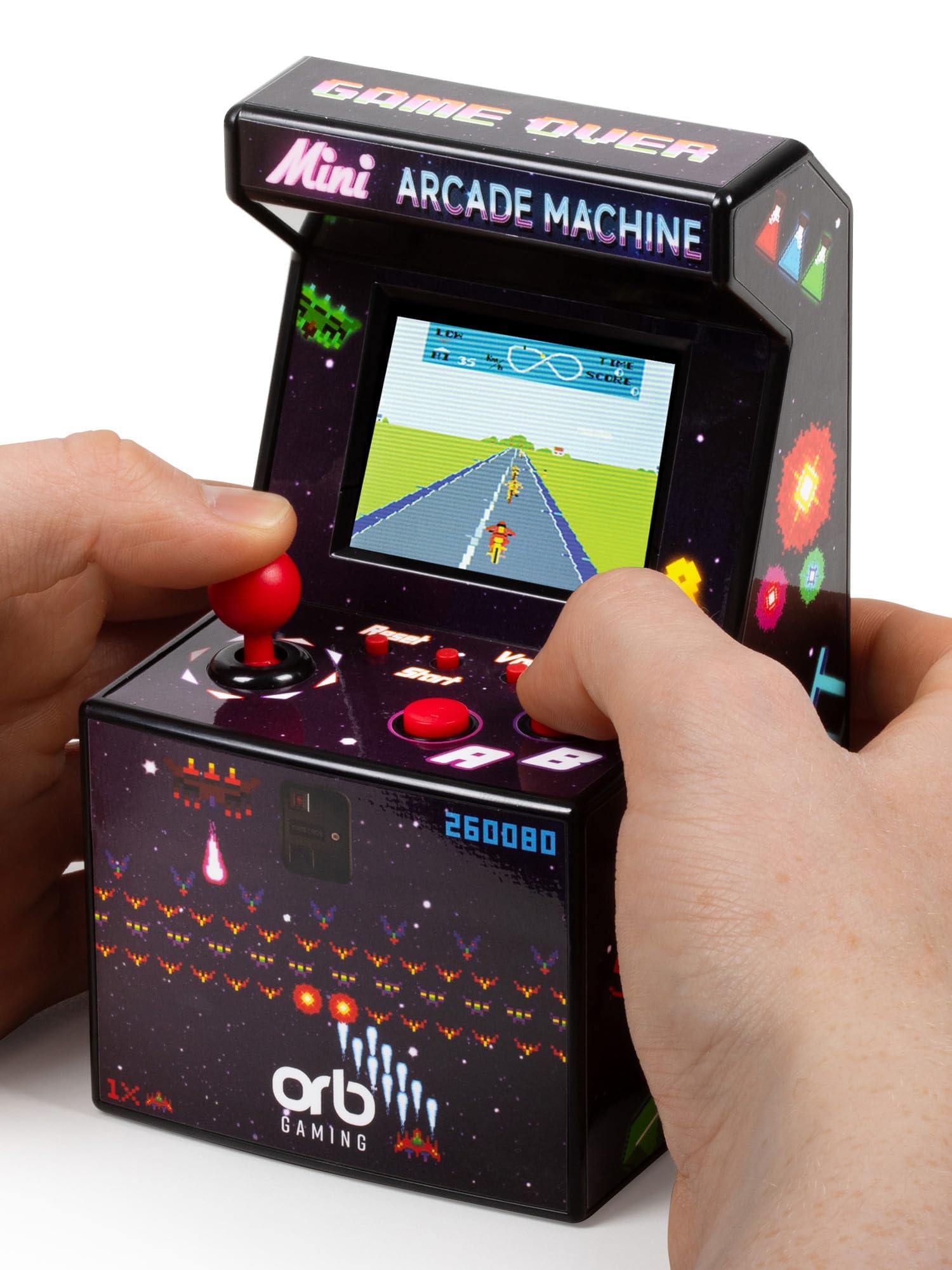
Mini Arcade Machine, 240 Built-In 8-Bit Games, 2.5” Full Colour Screen, 8-Way Joystick, Handheld Retro Games Console – Orb Gaming by ThumbsUp!
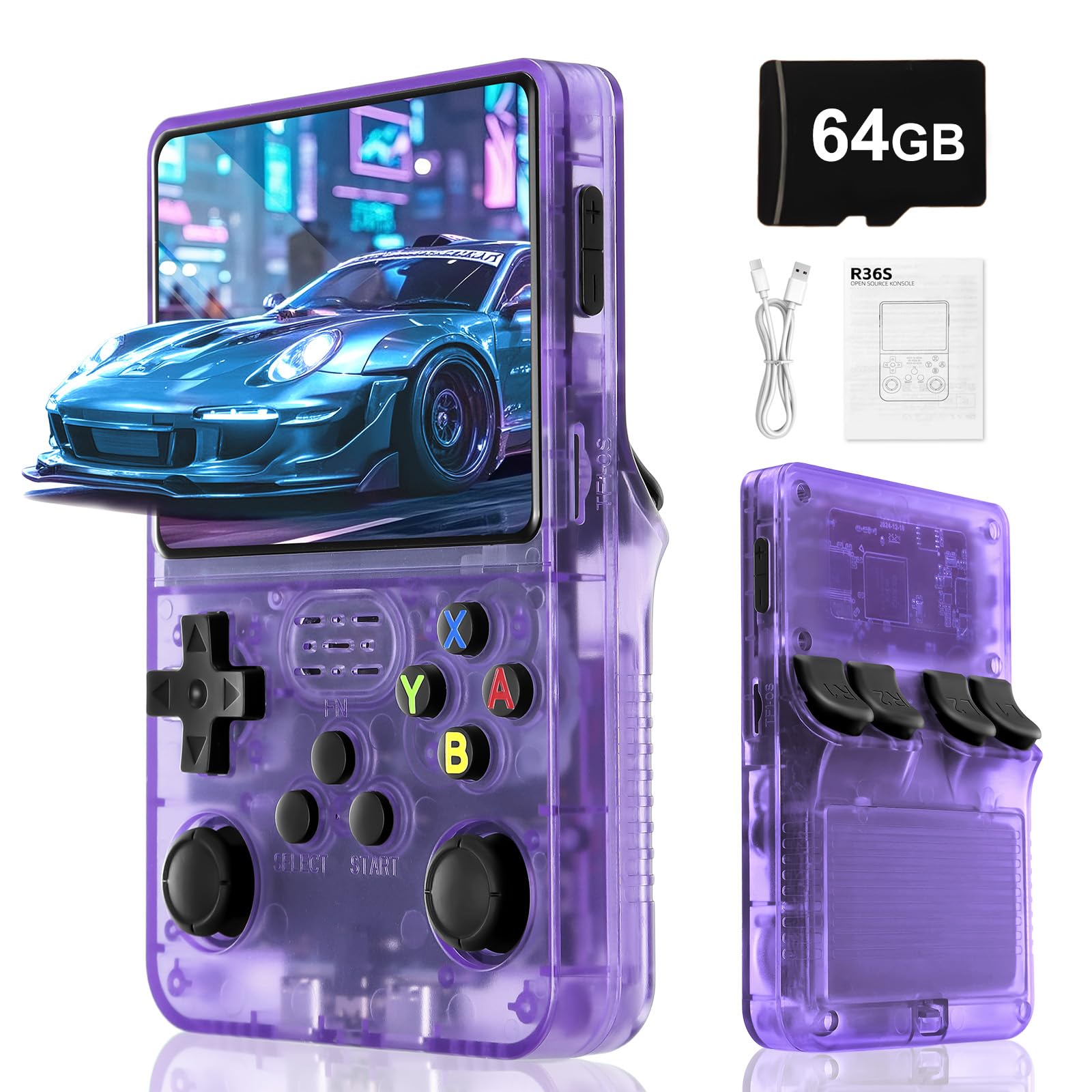
Blidinner R36S Retro Handheld Video Game Console -Linux System,3000mAh Battery,3.5 Inch Screen,64G TF Card,20000+ Classic Games,Portable Game Console for Present to Give Friends for Christmas-Purple
Our Recommendation
Product A is the better buy for most people because it is half the price, has a much stronger 4.3/5 rating from 2,451 reviews, and offers a simple, reliable retro experience. Product B does have a bigger screen, larger battery, and far more games, but it costs £20 more and is rated lower at 3.8/5. If you want the safest value purchase, choose the Orb Gaming mini arcade machine.
Detailed Comparison
Display
Product B wins the display category. Its 3.5-inch screen is noticeably larger than Product A’s 2.5-inch full-colour screen, which matters a lot for retro games where text, sprites, and menus can feel cramped on a tiny panel. The extra 1 inch of diagonal size gives the R36S a more comfortable handheld viewing experience, especially for longer sessions. Product A does have a full-colour display, which is a plus for a mini arcade toy, but the smaller size limits readability and immersion. If screen quality and playability are priorities, the R36S is the better choice.
Performance
Product B also wins on performance, at least on paper. The R36S runs a Linux system, which usually means broader emulation flexibility and more serious handheld functionality than a basic plug-and-play mini arcade device. Product A’s 240 built-in 8-bit games suggest a fixed, lightweight software package designed for simplicity rather than depth. That can be perfectly fine for quick nostalgia, but it is not in the same class as a Linux-based handheld with 20,000+ games on a 64G TF card. The R36S is the more capable device for users who want a broader retro gaming experience.
Build quality and design
This category is more nuanced, but Product A has the edge for straightforward, toy-like durability and pick-up-and-play design. The Orb Gaming mini arcade format with an 8-way joystick is easy to understand, compact, and likely better suited to younger users or anyone who wants an instantly familiar arcade feel. Product B is a more complex handheld with a larger screen and broader feature set, but that also tends to bring more variability in build consistency, especially given its lower user rating. With 4.3/5 from 2,451 reviews, Product A has much stronger evidence of customer satisfaction and likely more predictable everyday usability. For overall confidence in build and design, Product A wins on proven consumer approval.
Battery life
Product B wins battery life on specification. Its 3,000mAh battery is a substantial advantage over a small mini arcade handheld, and that capacity is more in line with a device meant for extended portable play. Product A does not list a battery capacity here, and its smaller, simpler design suggests it is likely less capable for long sessions away from power. If you want a handheld that feels like a proper portable console, the R36S has the better battery proposition. That said, real-world battery life can vary with screen brightness and emulation load, so the spec advantage is meaningful but not a guarantee.
Price and value for money
Product A wins decisively on price and value. At £19.99, it is £20 cheaper than Product B’s £39.99 asking price, and that is a huge gap in this category. The lower price is backed by a much stronger rating, 4.3/5 from 2,451 reviews, which is a far larger and more trustworthy sample than Product B’s 3.8/5 from 357 reviews. If you are buying a retro handheld as a gift, novelty item, or casual travel distraction, Product A delivers a lot of satisfaction for very little money. Product B may offer more features, but it is asking twice the price for a product that is less well reviewed.
Game library and features
Product B wins the library/features category clearly. The R36S advertises 20,000+ classic games on a 64G TF card, which is far more expansive than Product A’s 240 built-in 8-bit games. That difference matters if you want variety, system coverage, or the feeling of a true all-in-one retro handheld. Product A’s smaller curated library is simpler and easier to manage, but it is limited by comparison and likely focused on very basic 8-bit titles. If the goal is sheer quantity and broader retro appeal, Product B is the stronger feature package.
Overall user experience
Product A wins overall for most buyers because it combines the strongest review score, the largest review count, and the lowest price. It is the safer purchase: easier to understand, cheaper to own, and backed by far more customer feedback. Product B offers a more ambitious handheld experience with a bigger screen, larger battery, Linux system, and vastly larger game library, but its weaker rating suggests more mixed satisfaction and a higher risk of disappointment. In practice, Product A is the better buy for casual users, kids, and anyone who wants simple retro fun without spending much. Product B is better only if you specifically want a more feature-rich emulation handheld and are willing to pay extra for it.
Overall summary: Product B wins on screen size, battery spec, and game library depth, but Product A wins the most important real-world categories: price, review confidence, and overall value. For most shoppers, the Orb Gaming mini arcade machine is the better purchase because it is cheaper, better rated, and less risky. The R36S is the more capable device on paper, but it is not the better buy unless you truly need the larger handheld format and massive game selection.
Buy the Mini Arcade Machine, if...
Buy Product A if you want the cheapest option that still has proven customer satisfaction and easy plug-and-play retro fun. It is a better fit for a child, a stocking filler, or a casual nostalgia device where simplicity matters more than features. It is also the safer choice if you do not want to gamble on a more complex handheld system.
Buy the Blidinner R36S Retro if...
Buy Product B if you specifically want a larger 3.5-inch screen, a Linux-based handheld, and a much bigger game library. It makes more sense if you plan to use it as a dedicated portable retro console rather than a novelty mini arcade toy. Choose it only if you are comfortable paying extra for features and can accept the lower review confidence.
Curated by Light Gun Gamer on All The Top Picks
As an Amazon Associate we earn from qualifying purchases.