
84-inch wall screen or 100-inch tripod setup: which wins?
If you’re choosing between a fixed pull-down screen and a portable tripod model, you’re really choosing between convenience, picture size, and how permanent your cinema setup should feel. The Pyle 84-inch roll-down screen is aimed at tidy wall or ceiling-mounted installs, while the lejiada 100-inch screen is built for bigger, more flexible viewing indoors or outdoors. Both are budget-friendly, both are well reviewed, and both can transform a projector from “nice” to “proper movie night.” The best choice depends on whether you value a cleaner permanent installation or a larger, more versatile image.

Pyle Projector Screen Pull Down Manual – 84-Inch Roll-Down Wall &Ceiling Mount Projection Screen with Black Masking Border for Home Cinema, Office or Classroom Use
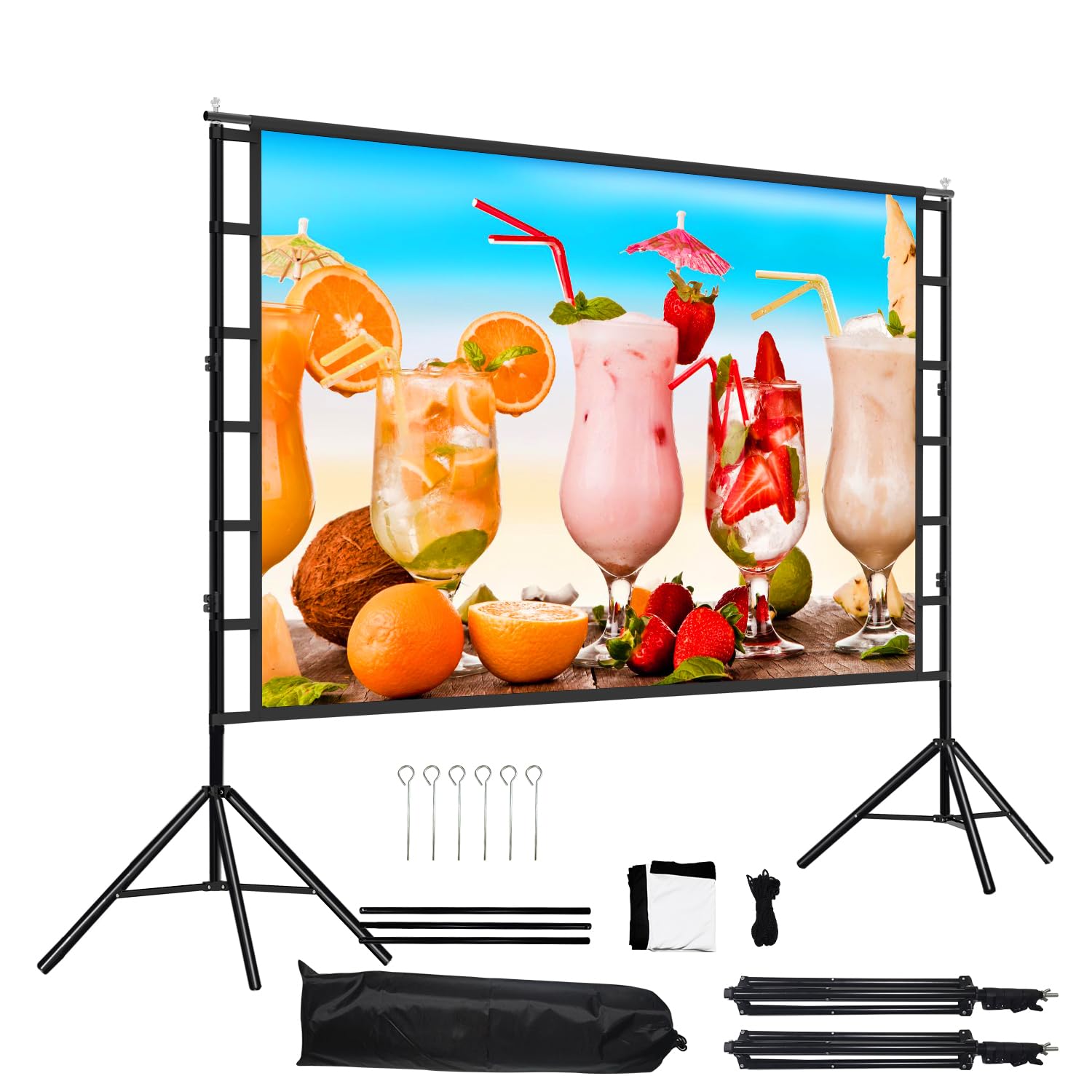
100 Inch Portable Projector Screen with Stand –lejiada Wrinkle-Free Outdoor 16:9 160° View Indoor Projection Screen, Anti-Wind Aluminium Tripod, Front Rear Projection, 10-Year Exchange
Our Recommendation
Product B, the lejiada 100-inch portable screen, is the better overall buy for most people. It is cheaper by £8.65, gives you a larger 100-inch image, and adds portability plus front/rear projection support. If you want the most screen for your money and the freedom to use it anywhere, it wins decisively. The Pyle only overtakes it if you specifically want a permanent wall or ceiling-mounted setup.
Detailed Comparison
Display
The lejiada wins here on pure screen size and viewing flexibility. At 100 inches, it gives you a noticeably larger image than the Pyle’s 84-inch format, which is a big deal for cinema-style immersion, especially in larger rooms or outdoor setups. It also advertises a 160° viewing angle and support for front and rear projection, making it more adaptable for group viewing and different projector placements. The Pyle’s black masking border is a nice touch for perceived contrast and framing, but the smaller 84-inch size means it simply cannot match the visual scale of the lejiada.
Performance
For performance, the lejiada again has the edge if your definition of performance is versatility. Its wrinkle-free screen material and front/rear projection support make it more forgiving for temporary setups, presentations, and backyard movie nights. The anti-wind aluminium tripod is a practical advantage outdoors, where stability matters. The Pyle is more of a fixed-install performer: once mounted, it should deliver a stable, consistent image with less fuss, but it lacks the portability and setup flexibility of the lejiada. If you want the screen to move with you, the lejiada is the stronger performer; if you want a set-and-forget wall or ceiling solution, the Pyle behaves more like a traditional cinema screen.
Build quality and design
This is where the Pyle pulls ahead. A manual pull-down screen mounted to the wall or ceiling feels neater, more permanent, and more polished in a home cinema, office, or classroom. The black border helps frame the image and can make the whole setup look more intentional. The lejiada’s tripod design is practical, but it is inherently more utilitarian: it is built for portability rather than elegant integration into a room. That said, the lejiada’s aluminium tripod suggests decent structural confidence for a budget portable screen, and the 10-year exchange promise is a reassuring sign of support. Still, for build and design in a fixed room, the Pyle wins.
Battery life
Neither product is battery-powered, so there is no battery life to compare. In real-world terms, the relevant factor is setup convenience rather than runtime. Here, the lejiada wins on portability because it can be deployed wherever you need it, while the Pyle wins on convenience once installed because it stays ready in place. If you were hoping for a battery-related advantage, neither screen offers one.
Price and value for money
The lejiada is the better value on paper. It is cheaper at £42.49 versus the Pyle at £51.14, saving you £8.65, while also giving you a larger 100-inch display and a more flexible portable setup. That is a strong value proposition for buyers who want maximum screen size per pound. The Pyle does justify its higher price somewhat through the cleaner fixed-install experience and the trusted feel of a wall/ceiling-mounted manual screen, but purely on features per pound, the lejiada wins. The review count also favours the lejiada slightly in confidence terms, with 2,081 reviews versus 1,275 for the Pyle, while both ratings are strong at 4.4/5 and 4.5/5 respectively.
Game library/features
Neither product has a game library, so this category does not apply in the usual sense. If we translate this into feature set, the lejiada wins because it offers more use-case flexibility: indoor and outdoor use, front and rear projection, 160° viewing, and a portable tripod design. The Pyle’s feature set is narrower but more focused: manual pull-down operation, wall or ceiling mounting, and a black masking border for a more cinema-like frame. So the lejiada takes the feature win, while the Pyle takes the simplicity win.
Overall user experience
The Pyle is the better experience if you want a clean, permanent installation that feels like part of the room. It is ideal for a dedicated home cinema, office, or classroom where you want to pull the screen down and get on with the show. The lejiada is the better experience if you want flexibility, a bigger picture, and the ability to move between rooms or take movie night outside. It is more adaptable and cheaper, but it will not look as seamless in a fixed home cinema space. Overall, the Pyle feels more refined, while the lejiada feels more versatile and better value.
Overall summary: choose the Pyle if you want a permanent, tidier wall-or-ceiling-mounted screen for a dedicated room. Choose the lejiada if you want the bigger 100-inch image, lower price, and the freedom to use it indoors or outdoors. For most buyers, the lejiada is the smarter buy on value and flexibility, but the Pyle is the better choice for a more polished fixed installation.
Buy the Pyle Projector Screen if...
Buy Product A if you are building a dedicated home cinema, classroom, or office and want a fixed screen that stays neatly installed. Its pull-down wall/ceiling design and black masking border make it feel more polished and permanent. It is the better choice when room aesthetics and a tidy installation matter more than portability.
Buy the 100 Inch Portable if...
Buy Product B if you want the largest image for the lowest price and need the screen to move between rooms or outdoors. The 100-inch size, 160° viewing angle, and tripod stand make it ideal for flexible movie nights, presentations, and temporary setups. It is also the stronger pick if you want front or rear projection support.
Curated by Screen Scene on All The Top Picks
As an Amazon Associate we earn from qualifying purchases.